Module 01 · Introduction to Server-Side JavaScript服务器端 JavaScript 入门
Back-end and Front-end Development Overview后端与前端开发概述
Back-end development, also known as server-side development, involves creating the part of a website or application that users do not see. It manages the server, database, and application logic, ensuring that the front-end has access to the necessary data and functionality.
后端开发,也称为服务器端开发,涉及创建用户看不到的网站或应用程序的部分。它管理服务器、数据库和应用程序逻辑,确保前端可以访问必要的数据和功能。
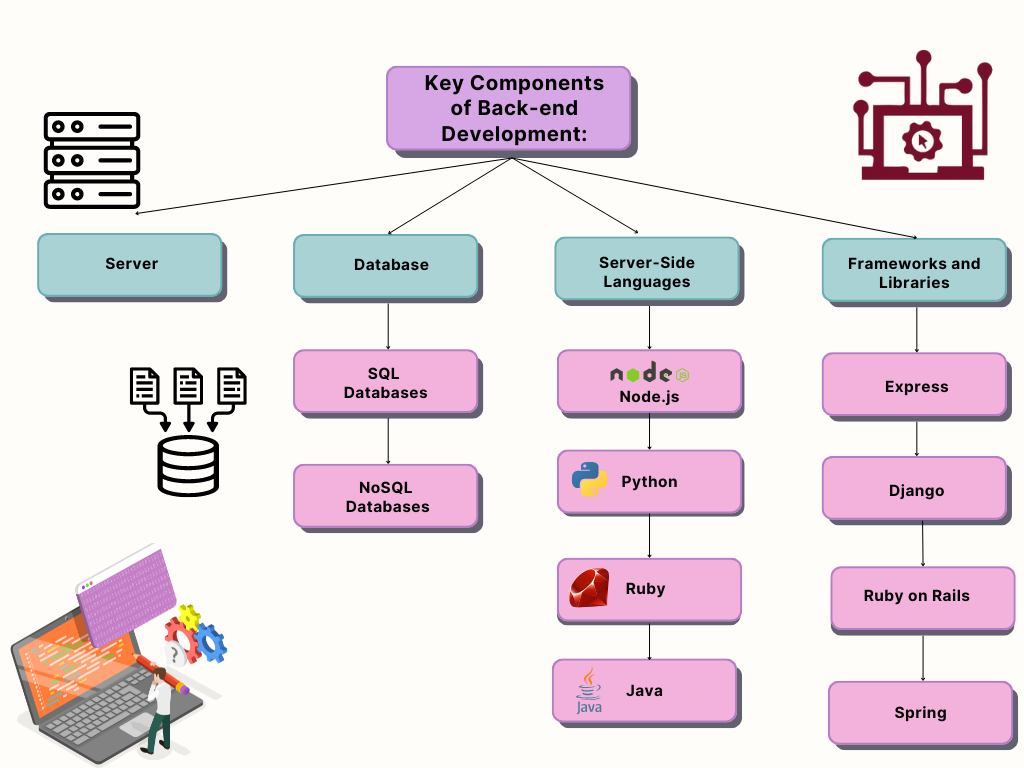
Key Components of Back-end Development 后端开发的关键组件
- Server: The hardware or software that provides resources, data, services, or programs to clients over a network.
服务器:向客户端通过网络提供资源、数据、服务或程序的硬件或软件。 - Database: A structured collection of data that can be easily accessed, managed, and updated.
数据库:一种结构化的数据集合,可以轻松访问、管理和更新。
- SQL Databases: Relational databases like MySQL, PostgreSQL, and SQLite.
SQL 数据库:如 MySQL、PostgreSQL 和 SQLite 等关系型数据库。 - NoSQL Databases: Non-relational databases like MongoDB, Cassandra, and Redis.
非关系型数据库:如 MongoDB、Cassandra 和 Redis。
- Server-Side Languages: Programming languages used to build the back-end logic.
服务器端语言:用于构建后端逻辑的编程语言。
- Node.js: JavaScript runtime built on Chrome's V8 JavaScript engine.
Node.js:基于 Chrome 的 V8 JavaScript 引擎构建的 JavaScript 运行时。 - Python: A high-level programming language known for its readability and efficiency.
Python:一种以可读性和效率著称的高级编程语言。 - Ruby: A dynamic, open-source programming language with a focus on simplicity.
Ruby:一种注重简洁的动态、开源编程语言。 - Java: A versatile and powerful programming language used for large-scale applications.
Java:一种适用于大规模应用的通用且强大的编程语言。
- Frameworks and Libraries:
框架和库:
- Express: A minimal and flexible Node.js web application framework.
Express:一个最小化和灵活的 Node.js Web 应用程序框架。 - Django: A high-level Python web framework that encourages rapid development.
Django:一个鼓励快速开发的 Python 高级 Web 框架。 - Ruby on Rails: A server-side web application framework written in Ruby.
Ruby on Rails:用 Ruby 编写的服务器端 Web 应用程序框架。 - Spring: A comprehensive framework for enterprise Java development.
Spring:企业级 Java 开发的综合框架。
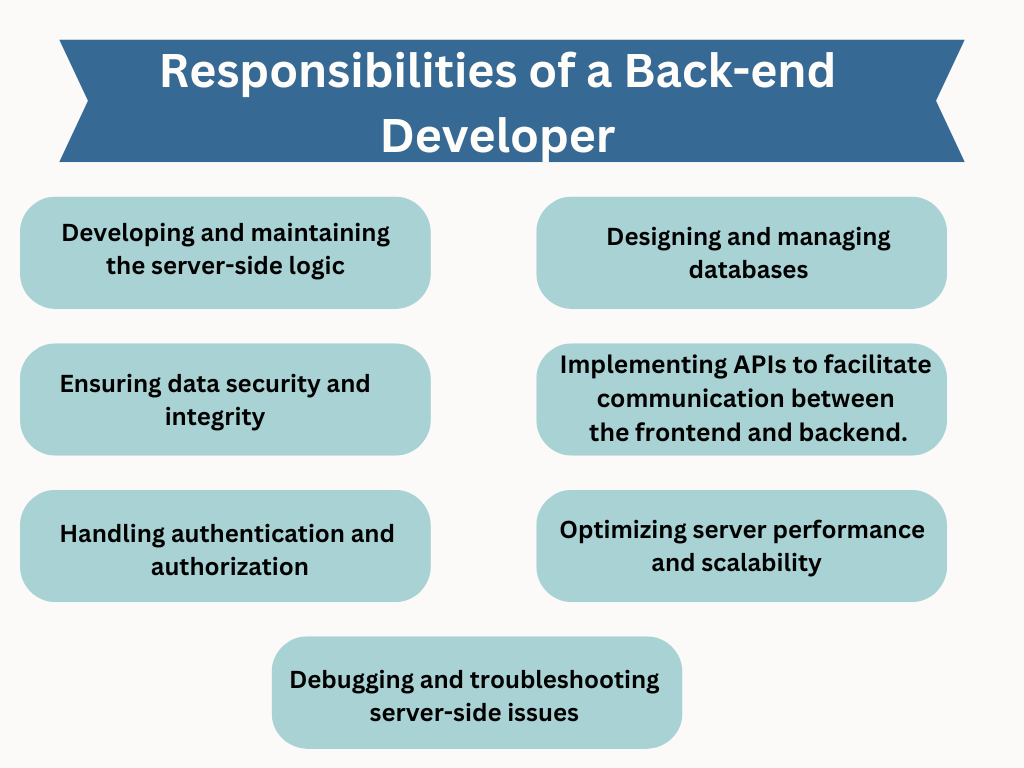
Responsibilities of a Back-end Developer 后端开发者的职责
Importance of a Robust, Scalable Back-end 重要性:强大的、可扩展的后端的重要性
A robust back-end ensures data security, performance, scalability, and smooth application logic. It supports user interactions, handles business logic, and integrates with front-end systems.
一个强大的后端确保数据安全、性能、可扩展性和平滑的应用逻辑。它支持用户交互、处理业务逻辑,并与前端系统集成。
Front-end Development 前端开发
Front-end development, also known as client-side development, involves creating the part of a website or application that users interact with directly. This includes everything the user experiences visually and through interactions.
前端开发,也称为客户端开发,涉及创建用户直接与之交互的网站或应用程序的部分。这包括用户在视觉上和通过交互体验的一切。
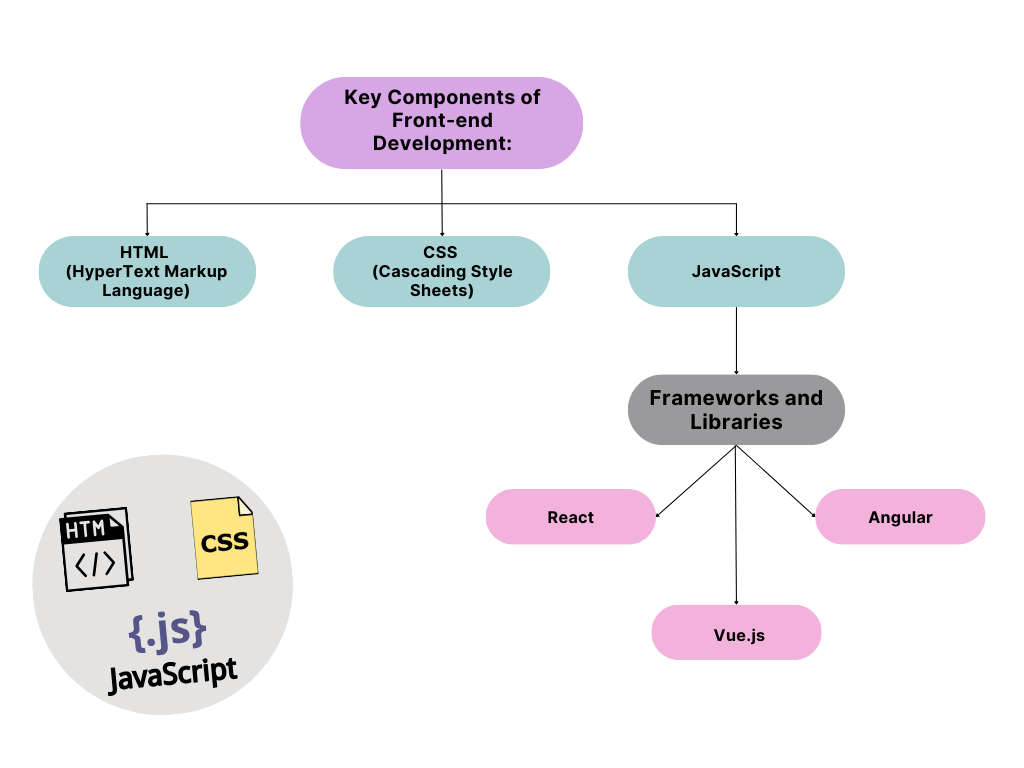
Key Components of Front-end Development 前端开发的关键组件
- HTML (HyperText Markup Language): The structure of web pages, defining elements such as headings, paragraphs, images, and links.
HTML(超文本标记语言):网页结构,定义标题、段落、图片和链接等元素。 - CSS (Cascading Style Sheets): The styling of web pages, including layout, colors, fonts, and responsiveness.
CSS(层叠样式表):网页的样式设计,包括布局、颜色、字体和响应式。 - JavaScript: The behavior of web pages, enabling interactive features like forms, animations, and dynamic content updates.
JavaScript:网页的行为,启用表单、动画和动态内容更新等交互功能。 - Frameworks and Libraries:
框架和库:
- React: A JavaScript library for building user interfaces.
React:用于构建用户界面的 JavaScript 库。 - Angular: A TypeScript-based framework for building web applications.
Angular:基于 TypeScript 构建 Web 应用的框架。 - Vue.js: A progressive JavaScript framework for building user interfaces.
Vue.js:用于构建用户界面的渐进式 JavaScript 框架。
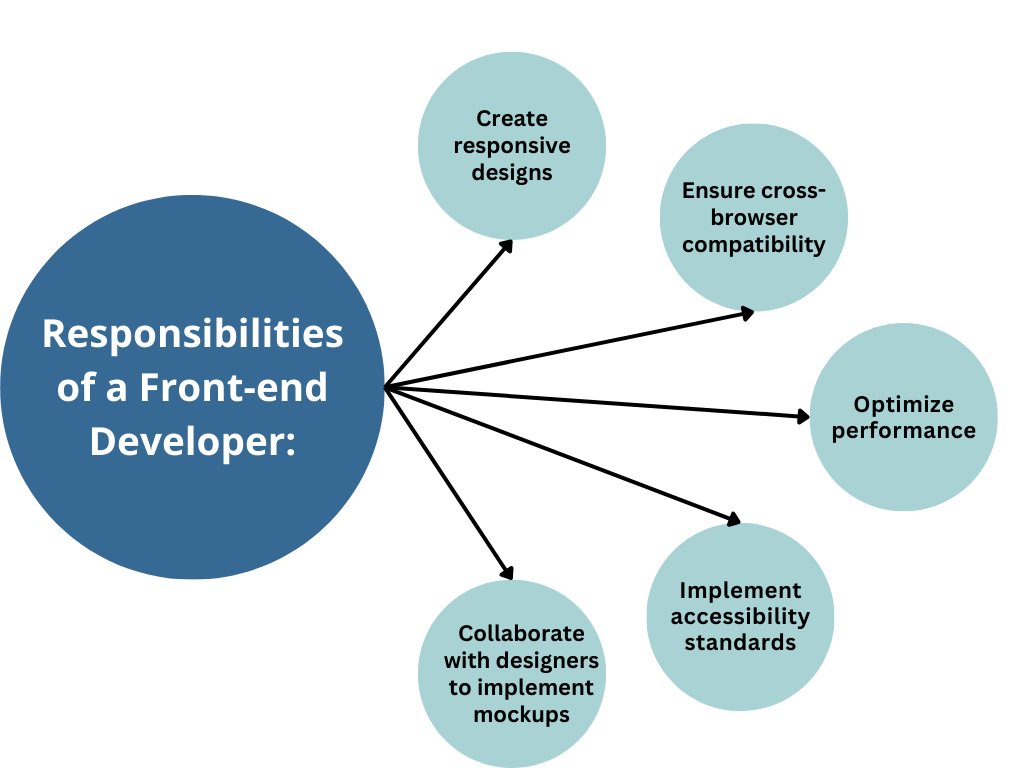
Responsibilities of a Front-end Developer 前端开发者的职责
Conclusion: 结论
Back-end and front-end development are essential for creating functional and user-friendly web applications. Front-end development involves technologies like HTML, CSS, and JavaScript to build interactive user interfaces. Back-end development manages servers, databases, and application logic using languages like Node.js, Python, and Java. A robust back-end ensures data security, performance, and scalability, supporting seamless integration with the front-end for a smooth user experience. Both are crucial for the success of any web application.
后端和前端开发对于创建功能齐全且用户友好的网络应用至关重要。前端开发涉及 HTML、CSS 和 JavaScript 等技术,用于构建交互式用户界面。后端开发使用 Node.js、Python 和 Java 等语言管理服务器、数据库和应用逻辑。强大的后端确保数据安全、性能和可扩展性,支持与前端的无缝集成,以实现流畅的用户体验。这两者对于任何网络应用的成功都至关重要。