Module 04 · The Kubernetes Ecosystem: OpenShift, Istio, etc.
Automating Builds with Build Triggers in OpenShift使用 OpenShift 中的构建触发器自动化构建
Estimated Time: 20 minutes 预计时间:20 分钟
Objectives 目标
After completing this reading, you will be able to:
完成本阅读后,您将能够:
- Understand the concept and importance of build triggers in OpenShift.
理解构建触发器在 OpenShift 中的概念及其重要性。 - Identify and describe the different types of build triggers available in OpenShift.
识别并描述 OpenShift 中可用的不同类型的构建触发器。 - Explain how webhook triggers work and their key features.
解释 webhook 触发器的工作原理及其关键特性。 - Describe the process and benefits of image change triggers.
描述图像变更触发器的流程和优势。 - Understand the functionality and advantages of configuration change triggers.
理解配置变更触发器的功能与优势。
Introduction to Build Triggers 构建触发器简介
In OpenShift, build triggers are essential for automating the build process, ensuring that applications are continuously updated and built efficiently. This reading will explore the different types of build triggers available in OpenShift, explaining each trigger in detail and how they contribute to a streamlined build process.
在 OpenShift 中,构建触发器对于自动化构建过程至关重要,确保应用程序能够持续更新并高效构建。本阅读将探讨 OpenShift 中可用的不同类型的构建触发器,详细解释每种触发器及其如何促进构建过程的简化。
Understanding Build Triggers 理解构建触发器
Build triggers in OpenShift are mechanisms that automatically initiate a build process based on specific events or conditions. By using these triggers, developers can automate and simplify the process of updating and deploying applications, leading to faster development cycles and reduced manual intervention.
在 OpenShift 中,构建触发器是基于特定事件或条件自动启动构建过程的机制。通过使用这些触发器,开发者可以自动化和简化更新和部署应用程序的过程,从而加快开发周期并减少人工干预。
Types of Build Triggers 构建触发器的类型
OpenShift offers several types of build triggers, each designed to respond to different events or changes in your environment. The main types of build triggers are:
OpenShift 提供了多种构建触发器类型,每种类型都设计用于响应不同的事件或环境中的变化。构建触发器的主要类型包括:
- Webhook Triggers Webhook 触发器
- Image Change Triggers 图片变更触发器
- Configuration Change Triggers
配置变更触发器
Let's delve into each type in detail 让我们详细探讨每种类型
1. Webhook Triggers 1. Webhook 触发器
Webhook triggers are a powerful feature that allows builds to be initiated via HTTP requests. These triggers are commonly used to integrate with external systems, such as GitHub, to automate builds based on specific repository events.
Webhook 触发器是一项强大的功能,允许通过 HTTP 请求启动构建。这些触发器通常用于与外部系统集成,例如 GitHub,以根据特定仓库事件自动构建。
How Webhook Triggers Work Webhook 触发器的工作原理
When a webhook trigger is configured, it sets up an endpoint in OpenShift that listens for HTTP POST requests. For instance, GitHub can be configured to send a request to this endpoint whenever a new commit is pushed to a repository, a pull request is merged, or other specified events occur. This request triggers the build process in OpenShift, ensuring that the latest code changes are automatically built and deployed.
当配置 webhook 触发器时,它会在 OpenShift 中设置一个端点来监听 HTTP POST 请求。例如,可以配置 GitHub 在向仓库推送新提交、合并拉取请求或其他指定事件发生时,向该端点发送请求。此请求会触发 OpenShift 中的构建过程,确保最新的代码更改被自动构建和部署。
Key Features 主要功能
- Integration with Git Repositories: Supports triggers from popular repositories like GitHub, GitLab, and Bitbucket.
与 Git 仓库集成:支持来自 GitHub、GitLab 和 Bitbucket 等流行仓库的触发器。 - Event-Driven: Initiates builds based on various events such as commits, merges, or tag creations.
事件驱动:基于提交、合并或标签创建等多种事件启动构建。 - Flexibility: Supports both generic and GitHub-specific webhooks, making it versatile for different use cases.
灵活性:支持通用和 GitHub 特定的 webhook,适用于不同的使用场景。
Example Workflow 示例工作流
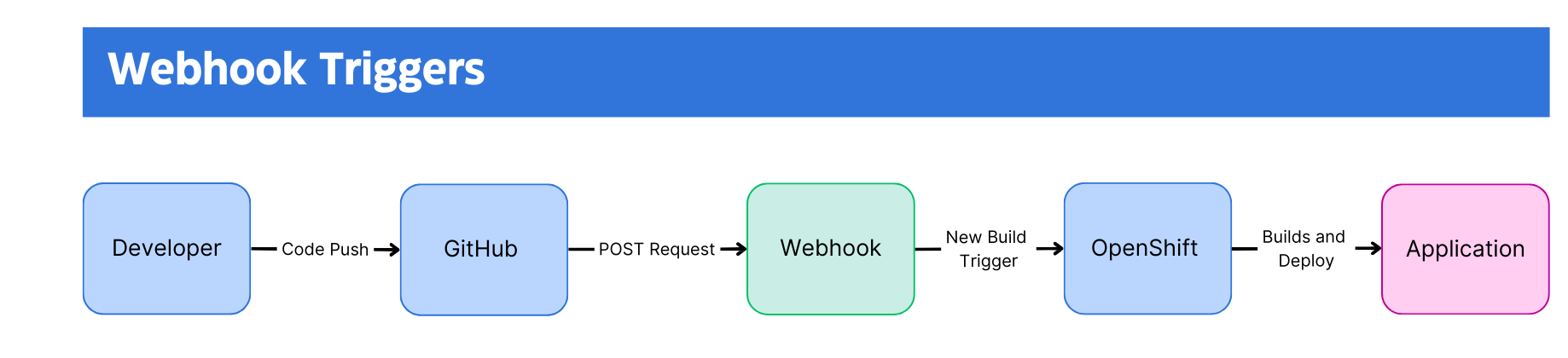
Below is a basic workflow diagram illustrating how a GitHub webhook trigger operates:
以下是一个基本的工作流图,说明了 GitHub webhook 触发器的工作原理:
Workflow Explanation: 工作流说明:
- A developer pushes new code to the GitHub repository.
开发者将新代码推送到 GitHub 仓库。 - GitHub sends a POST request to the OpenShift webhook endpoint.
GitHub 向 OpenShift webhook 端点发送 POST 请求。 - The webhook triggers a new build in OpenShift.
webhook 在 OpenShift 中触发一个新的构建。 - OpenShift builds the application and updates the deployment.
OpenShift 构建应用程序并更新部署。
2. Image Change Triggers 2. 图像变更触发
Image change triggers automatically initiate builds when a new version of a container image becomes available. This type of trigger is particularly useful for maintaining up-to-date applications with the latest dependencies or security patches.
图像变更触发器在新的容器镜像版本可用时自动启动构建。这种触发器特别适用于使用最新依赖项或安全补丁维护应用程序最新版本的情况。
How Image Change Triggers Work 图像变更触发器的工作原理
When an image change trigger is set up, it monitors a specified container image for updates. For example, if your application relies on a Node.js base image, an image change trigger can be configured to detect updates to this base image. When a new version of the image is available, the trigger initiates a build process to incorporate the updated image into your application.
当设置图像变更触发器时,它会监控指定的容器镜像以检测更新。例如,如果您的应用程序依赖于 Node.js 基础镜像,可以配置图像变更触发器来检测该基础镜像的更新。当镜像有新版本可用时,触发器会启动构建过程以将更新后的镜像纳入您的应用程序。
Key Features 主要功能
- Automated Dependency Management: Ensures that applications are automatically rebuilt with the latest base images or libraries.
自动化依赖管理:确保应用程序使用最新的基础镜像或库自动重新构建。 - Security and Maintenance: Helps in quickly responding to security vulnerabilities by initiating builds with updated base images.
安全与维护:通过使用更新后的基础镜像启动构建,帮助快速响应安全漏洞。 - Continuous Updates: Keeps applications up-to-date with the latest changes in dependent images.
持续更新:使应用程序与依赖镜像的最新变化保持同步。
Example Workflow 示例工作流
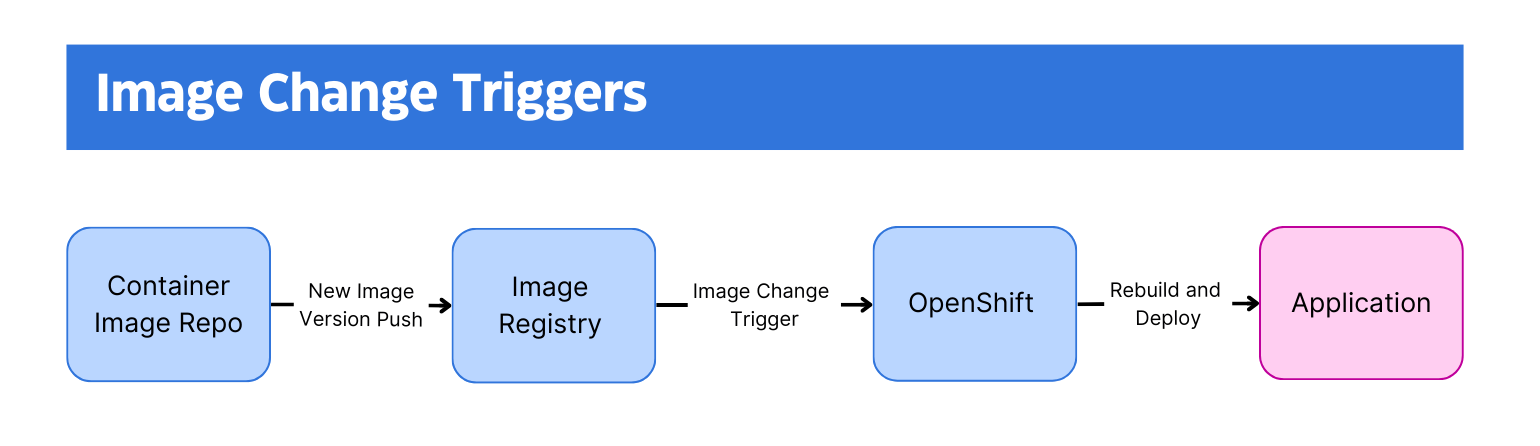
Here is a simple workflow diagram illustrating how an image change trigger functions:
这里是一个简单的流程图,说明了图像变更触发器的工作原理:
Workflow Explanation: 流程说明:
- A new version of the base image (e.g., Node.js) is pushed to the image registry.
基础图像的新版本(例如 Node.js)被推送到图像注册中心。 - The image change trigger detects the update.
图像变更触发器检测到更新。 - OpenShift initiates a new build process using the updated base image.
OpenShift 使用更新后的基础镜像启动新的构建过程。 - The application is rebuilt and redeployed with the latest image.
应用程序使用最新镜像重新构建并重新部署。
3. Configuration Change Triggers 3. 配置更改触发器
Configuration change triggers initiate builds when a new BuildConfig resource is created or an existing one is modified. These triggers allows builds to automatically reflect changes in the build configuration, such as updates to source code repositories or changes in build strategies.
配置更改触发器在创建新的 BuildConfig 资源或修改现有资源时启动构建。这些触发器允许构建自动反映构建配置中的更改,例如源代码存储库的更新或构建策略的更改。
How Configuration Change Triggers Work 配置变更触发器的工作原理
Configuration change triggers monitor the BuildConfig resources in OpenShift. Whenever a new BuildConfig is created or an existing one is updated, the trigger automatically starts a new build. The triggers ensure that any changes in the build configuration are immediately applied to the application, keeping it in sync with the latest configuration settings.
配置变更触发器监控 OpenShift 中的 BuildConfig 资源。每当创建新的 BuildConfig 或更新现有的 BuildConfig 时,触发器会自动启动新的构建。触发器确保构建配置的任何变更都能立即应用到应用程序中,使其与最新的配置设置保持同步。
Key Features 主要功能
- Automatic Build Updates: Ensures builds reflect the latest configuration changes without manual intervention.
自动构建更新:确保构建反映最新的配置变更,无需人工干预。 - Simplified Configuration Management: Helps in managing and applying build configurations efficiently.
简化配置管理:有助于高效管理和应用构建配置。 - Flexibility: Allows for a wide range of configuration changes to trigger builds, such as updates to source repositories, build strategies, or output settings.
灵活性:允许通过多种配置更改触发构建,例如源代码库更新、构建策略或输出设置。
Example Workflow 示例工作流
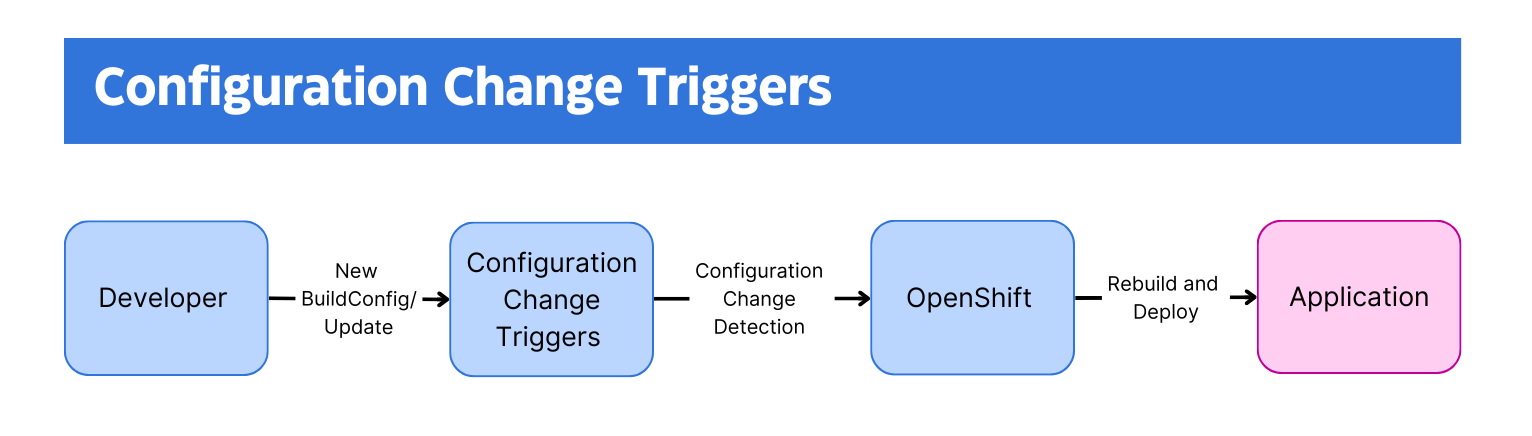
Below is a basic workflow diagram showing how a configuration change trigger operates:
以下是一个基本的工作流图,展示了配置更改触发操作的工作原理:
Workflow Explanation: 工作流说明:
- A new BuildConfig resource is created or an existing one is updated.
创建一个新的 BuildConfig 资源或更新现有的资源。 - The configuration change trigger detects the change.
配置更改触发器检测到更改。 - OpenShift initiates a new build process based on the updated BuildConfig.
OpenShift 基于更新的 BuildConfig 启动一个新的构建过程。 - The application is rebuilt and redeployed with the new configuration.
应用程序使用新配置进行重建和重新部署。
Conclusion 结论
Build triggers in OpenShift provide a robust mechanism for automating the build and deployment process. By using webhook, image change, and configuration change triggers, you can ensure that your applications are continuously built and updated based on the latest changes and events. This automation leads to more efficient development cycles, quicker response times to updates or issues, and reduced manual overhead. Thus, ultimately contributing to a more streamlined and reliable development workflow.
OpenShift 中的构建触发器提供了一种强大的机制,用于自动化构建和部署过程。通过使用 webhook、镜像更改和配置更改触发器,您可以确保应用程序根据最新的更改和事件持续构建和更新。这种自动化带来了更高效的开发周期、对更新或问题的更快速响应时间,并减少了人工开销。因此,最终有助于实现更精简、更可靠的开发工作流程。