Module 02 · Foundations心理学基础
Thinking like a Psychological Scientist心理科学思维
By Erin I. Smith 作者:Erin I. Smith
California Baptist University
加利福尼亚浸会大学
We are bombarded every day with claims about how the world works, claims that have a direct impact on how we think about and solve problems in society and our personal lives. This module explores important considerations for evaluating the trustworthiness of such claims by contrasting between scientific thinking and everyday observations (also known as “anecdotal evidence”).
每天我们都被关于世界运作方式的声称所淹没,这些声称直接影响我们思考和解决社会和个人生活中的问题的方式。本模块通过对比科学思维和日常观察(也被称为“个别证据”)之间的区别,探讨评估这些声明可信度的重要考虑因素。
- Facts 事实
- Falsifiable 可证伪的
- Hypothesis 假设
- Inductive reasoning 归纳推理
- Levels of analysis 级别分析
- Null hypothesis significance testing
零假设显著性检验 - Theory 理论
- Type I error 类型 I 错误
- Type II error 类型 II 错误
- Values 值
Learning Objectives 学习目标
- Compare and contrast conclusions based on scientific and everyday inductive reasoning.
- Understand why scientific conclusions and theories are trustworthy, even if they are not able to be proven.
- Articulate what it means to think like a psychological scientist, considering qualities of good scientific explanations and theories.
- Discuss science as a social activity, comparing and contrasting facts and values.
讨论科学作为一种社会活动,对事实和价值进行比较和对比。
Introduction 介绍
Why are some people so much happier than others? Is it harmful for children to have imaginary companions? How might students study more effectively?
为什么有些人比其他人更快乐?孩子有想象中的伴侣会是有害的吗?学生如何更有效地学习?
Today, people are overwhelmed with information although it varies in quality. [Image: Mark Smiciklas, https://goo.gl/TnZCoH, CC BY-NC 2.0, https://goo.gl/AGYuo9]
如今,人们对信息感到压倒性,尽管其质量有所不同。【图片:Mark Smiciklas,https://goo.gl/TnZCoH,CC BY-NC 2.0,https://goo.gl/AGYuo9】
Even if you’ve never considered these questions before, you probably have some guesses about their answers. Maybe you think getting rich or falling in love leads to happiness. Perhaps you view imaginary friends as expressions of a dangerous lack of realism. What’s more, if you were to ask your friends, they would probably also have opinions about these questions—opinions that may even differ from your own.
就算你以前从未考虑过这些问题,你可能对它们的答案有一些猜测。也许你认为致富或恋爱会带来幸福。或许你把想象中的朋友视为一种危险的缺乏现实主义的表达方式。此外,如果你问问你的朋友,他们可能对这些问题也有自己的观点——这些观点甚至可能与你的观点不同。
A quick internet search would yield even more answers. We live in the “Information Age,” with people having access to more explanations and answers than at any other time in history. But, although the quantity of information is continually increasing, it’s always good practice to consider the quality of what you read or watch: Not all information is equally trustworthy. The trustworthiness of information is especially important in an era when “fake news,” urban myths, misleading “click-bait,” and conspiracy theories compete for our attention alongside well-informed conclusions grounded in evidence. Determining what information is well-informed is a crucial concern and a central task of science. Science is a way of using observable data to help explain and understand the world around us in a trustworthy way.
一个快速的互联网搜索将会得到更多答案。我们生活在“信息时代”,人们可以获得比历史上任何其他时期都更多的解释和答案。但是,尽管信息的数量不断增加,但考虑所阅读或观看的内容的质量始终是一种良好的实践:并非所有信息都同样可信。信息的可信度在当今时代尤为重要,因为“假新闻”,都市传说,误导性的“点击诱饵”和阴谋论与基于证据的明智结论竞争,而这些明智结论是我们关注的重要内容。确定信息是否明智是一项关键问题,也是科学的核心任务之一。科学是一种使用可观测数据来帮助解释和理解我们周围世界的可靠方式。
In this module, you will learn about scientific thinking. You will come to understand how scientific research informs our knowledge and helps us create theories. You will also come to appreciate how scientific reasoning is different from the types of reasoning people often use to form personal opinions.
在本模块中,您将学习科学思维。您将了解科学研究如何影响我们的知识并帮助我们形成理论。您还将了解科学推理与人们常常用来形成个人观点的推理方法之间的区别。
Scientific Versus Everyday Reasoning 科学推理与日常推理的区别
Each day, people offer statements as if they are facts, such as, “It looks like rain today,” or, “Dogs are very loyal.” These conclusions represent hypotheses about the world: best guesses as to how the world works. Scientists also draw conclusions, claiming things like, “There is an 80% chance of rain today,” or, “Dogs tend to protect their human companions.” You’ll notice that the two examples of scientific claims use less certain language and are more likely to be associated with probabilities. Understanding the similarities and differences between scientific and everyday (non-scientific) statements is essential to our ability to accurately evaluate the trustworthiness of various claims.
每天,人们会发表一些像是事实的陈述,比如,“今天看起来要下雨”,或者,“狗非常忠诚”。这些结论是对世界的假设:对世界运作方式的最佳猜测。科学家也会得出结论,比如,“今天有 80%的可能性会下雨”,或者,“狗往往会保护他们的人类伴侣。”你会注意到,科学声明的这两个例子使用了更不确定的语言,并且更有可能与概率相关。理解科学和日常(非科学)陈述之间的相似性和差异对我们准确评估各种观点的可信度至关重要。
Scientific and everyday reasoning both employ induction: drawing general conclusions from specific observations. For example, a person’s opinion that cramming for a test increases performance may be based on her memory of passing an exam after pulling an all-night study session. Similarly, a researcher’s conclusion against cramming might be based on studies comparing the test performances of people who studied the material in different ways (e.g., cramming versus study sessions spaced out over time). In these scenarios, both scientific and everyday conclusions are drawn from a limited sample of potential observations.
科学推理和日常推理都使用归纳法:从具体观察中得出一般结论。例如,一个人认为临时抱佛脚能提高测试成绩,可能是基于她记得在一个彻夜学习后通过了一次考试的经历。同样地,一个研究人员反对临时抱佛脚的结论可能是基于对以不同方式学习材料的人的测试表现进行对比的研究(例如,临时抱佛脚与分散在一段时间内进行的学习对比)。在这些场景中,科学和日常结论都是基于有限的潜在观察样本得出的。
The process of induction, alone, does not seem suitable enough to provide trustworthy information—given the contradictory results. What should a student who wants to perform well on exams do? One source of information encourages her to cram, while another suggests that spacing out her studying time is the best strategy. To make the best decision with the information at hand, we need to appreciate the differences between personal opinions and scientific statements, which requires an understanding of science and the nature of scientific reasoning.
单靠归纳法似乎不能提供可靠的信息,因为结果相互矛盾。想要在考试中表现出色的学生应该怎么做?一个信息源鼓励她临时抱佛脚,而另一个则建议她分散学习时间是最佳策略。为了根据手头的信息做出最佳决策,我们需要理解个人意见和科学陈述之间的区别,这就需要了解科学和科学推理的性质。
There are generally agreed-upon features that distinguish scientific thinking—and the theories and data generated by it—from everyday thinking. A short list of some of the commonly cited features of scientific theories and data is shown in Table 1.
通常有共识的特征可以区分科学思维及其生成的理论和数据与日常思维。表 1 列出了一些经常被引用的科学理论和数据的特征。
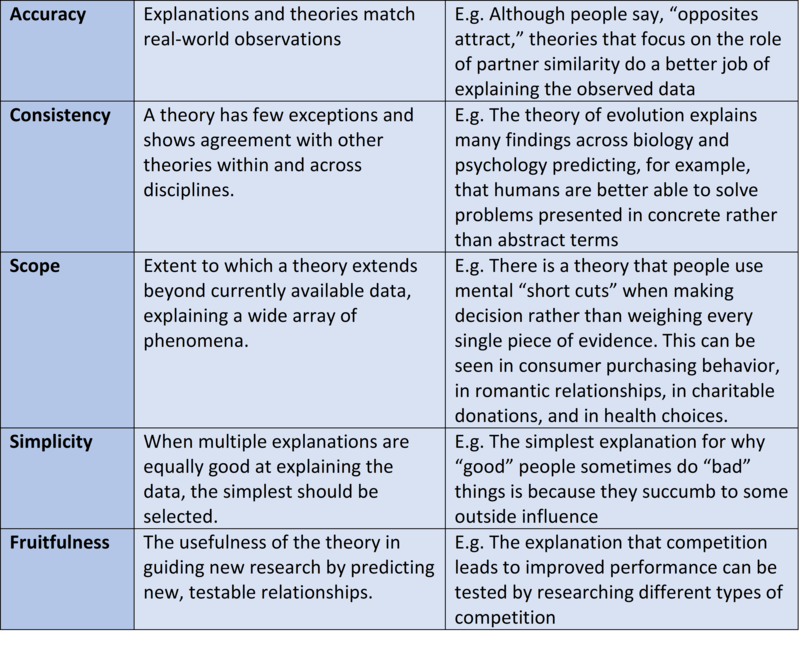
Table 1. Features of good scientific theories (Kuhn, 2011)
表 1. 良好科学理论的特征(Kuhn,2011)
One additional feature of modern science not included in this list but prevalent in scientists’ thinking and theorizing is falsifiability, a feature that has so permeated scientific practice that it warrants additional clarification. In the early 20th century, Karl Popper (1902-1994) suggested that science can be distinguished from pseudoscience (or just everyday reasoning) because scientific claims are capable of being falsified. That is, a claim can be conceivably demonstrated to be untrue. For example, a person might claim that “all people are right handed.” This claim can be tested and—ultimately—thrown out because it can be shown to be false: There are people who are left-handed. An easy rule of thumb is to not get confused by the term “falsifiable” but to understand that—more or less—it means testable.
现代科学的一个额外特征未被列入此清单,但在科学家思考和理论构建中普遍存在的是可证伪性,这一特征已经在科学实践中广泛渗透,值得进一步澄清。在 20 世纪初,卡尔·波普尔(1902-1994 年)提出,科学可以与伪科学(或者只是日常推理)加以区分,因为科学主张具有可被证伪的能力。也就是说,一个主张可被证明为不真实。例如,一个人可能声称“所有人都是右撇子。”这种主张可以进行测试,并且最终被否定,因为可以证明它是错误的:有些左撇子的人存在。一个简单的经验法则是不要被“可证伪”一词搞混,而要理解它的意思或多或少等同于可测试。
On the other hand, some claims cannot be tested and falsified. Imagine, for instance, that a magician claims that he can teach people to move objects with their minds. The trick, he explains, is to truly believe in one’s ability for it to work. When his students fail to budge chairs with their minds, the magician scolds, “Obviously, you don’t truly believe.” The magician’s claim does not qualify as falsifiable because there is no way to disprove it. It is unscientific.
另一方面,一些主张无法进行测试和证伪。例如,想象一下,一个魔术师声称自己可以教人们用思维移动物体。他解释说,关键在于真正相信自己的能力才能生效。当他的学生无法用思维移动椅子时,魔术师责备道:“显然,你们不是真正相信。”这个魔术师的主张不符合可证伪性,因为没有办法来证明它是错误的。它不具备科学性。
Popper was particularly irritated about nonscientific claims because he believed they were a threat to the science of psychology. Specifically, he was dissatisfied with Freud’s explanations for mental illness. Freud believed that when a person suffers a mental illness it is often due to problems stemming from childhood. For instance, imagine a person who grows up to be an obsessive perfectionist. If she were raised by messy, relaxed parents, Freud might argue that her adult perfectionism is a reaction to her early family experiences—an effort to maintain order and routine instead of chaos. Alternatively, imagine the same person being raised by harsh, orderly parents. In this case, Freud might argue that her adult tidiness is simply her internalizing her parents’ way of being. As you can see, according to Freud’s rationale, both opposing scenarios are possible; no matter what the disorder, Freud’s theory could explain its childhood origin—thus failing to meet the principle of falsifiability.
波普对非科学性的论断特别感到恼火,因为他认为它们威胁到心理学的科学性。具体而言,他对弗洛伊德关于精神疾病的解释感到不满意。弗洛伊德认为,当一个人患有精神疾病时,通常是由于童年时期的问题造成的。例如,想象一个长大后成为一个过分追求完美的人。如果她的父母邋遢随意,弗洛伊德可能会认为她成年后的完美主义是对她早年家庭经历的反应 - 为了维持秩序和例行而不是混乱。或者,想象同样的人是被严厉有序的父母抚养长大的。在这种情况下,弗洛伊德可能会认为她成年后的整洁只是她将父母的行为内化了。正如你所看到的,根据弗洛伊德的理论,无论有什么障碍,他的理论都可以解释其童年起源 - 因此未能满足可证伪性原则。
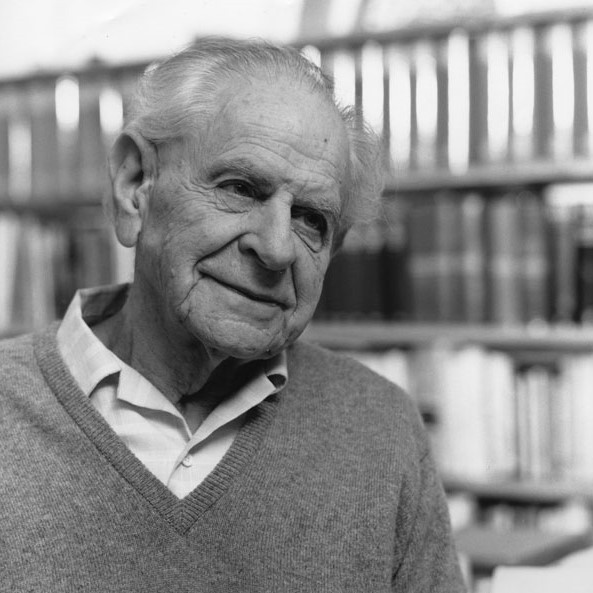
Karl Popper was an influential thinker regarding scientific theory and reasoning. [Image: Lucinda Douglas-Menzies, https://goo.gl/uuqxCe[]](https://goo.gl/uuqxCe%5D)
卡尔·波普尔是有关科学理论和推理的有影响力的思想家。[图片:露辛达·道格拉斯-门齐斯,https://goo.gl/uuqxCe]
Popper argued against statements that could not be falsified. He claimed that they blocked scientific progress: There was no way to advance, refine, or refute knowledge based on such claims. Popper’s solution was a powerful one: *If science showed all the possibilities that were not true, we would be left only with what is true. *That is, we need to be able to articulate—beforehand—the kinds of evidence that will disprove our hypothesis and cause us to abandon it.
波普尔反对无法被证伪的陈述。他声称这些陈述阻碍了科学进步:根据这些陈述,无法推进、完善或否定知识。波普尔提出了一个强有力的解决方案:如果科学展示了所有不正确的可能性,我们就只剩下了真实的东西。也就是说,我们需要能够预先表述出能够证明我们假设有误并导致我们放弃它的证据类型。
This may seem counterintuitive. For example, if a scientist wanted to establish a comprehensive understanding of why car accidents happen, she would systematically test all potential causes: alcohol consumption, speeding, using a cell phone, fiddling with the radio, wearing sandals, eating, chatting with a passenger, etc. A complete understanding could only be achieved once all possible explanations were explored and either falsified or not. After all the testing was concluded, the evidence would be evaluated against the criteria for falsification, and only the real causes of accidents would remain. The scientist could dismiss certain claims (e.g., sandals lead to car accidents) and keep only those supported by research (e.g., using a mobile phone while driving increases risk). It might seem absurd that a scientist would need to investigate so many alternative explanations, but it is exactly how we rule out bad claims. Of course, many explanations are complicated and involve multiple causes—as with car accidents, as well as psychological phenomena.
这可能看起来有些违反直觉。例如,如果一个科学家想要建立对车祸发生的全面理解,她将系统性地测试所有可能的原因:酒精摄入、超速、使用手机、调整收音机、穿凉鞋、吃东西、与乘客聊天等等。只有在探索并验证了所有可能的解释后,才能达到完全的理解。所有测试结束后,证据将根据证伪的标准进行评估,只有真正的事故原因会留存下来。科学家可以排除某些观点(例如,穿凉鞋会导致车祸),只保留那些经过研究支持的观点(例如,开车时使用手机增加风险)。科学家需要调查这么多的替代解释可能看起来荒谬,但这正是我们排除错误观点的方法。当然,很多解释都很复杂,涉及多个原因,比如车祸和心理现象。
Test Yourself 1: Can It Be Falsified? 测试自己 1:能被证伪吗?
Which of the following hypotheses can be falsified? For each, be sure to consider what kind of data could be collected to demonstrate that a statement is not true.
以下哪些假设可以被证伪?对于每个选项,请考虑可以收集什么样的数据来证明该陈述不正确。
A. Chocolate tastes better than pasta.
A. 巧克力比面食更好吃。
B. We live in the most violent time in history.
B. 我们生活在人类历史上最暴力的时代。
C. Time can run backward as well as forward.
时间可以向前且向后流动。
D. There are no planets other than Earth that have water on them.
D. 除地球以外,并没有其他拥有水的行星。
[See answer at end of this module]
[请参阅本模块结尾处的答案]
Although the idea of falsification remains central to scientific data and theory development, these days it’s not used strictly the way Popper originally envisioned it. To begin with, scientists aren’t solely interested in demonstrating what *isn’t. *Scientists are also interested in providing descriptions and explanations for the way things are. We want to describe different causes and the various conditions under which they occur. We want to discover when young children start speaking in complete sentences, for example, or whether people are happier on the weekend, or how exercise impacts depression. These explorations require us to draw conclusions from limited samples of data. In some cases, these data seem to fit with our hypotheses and in others they do not. This is where interpretation and probability come in.
虽然证伪的概念仍然是科学数据和理论发展的核心,但如今并不像波普最初设想的那样严格使用。首先,科学家不仅仅关心证明哪些不是。科学家还关心提供事物存在的描述和解释。我们想要描述不同的原因以及它们发生的各种条件。例如,我们想要发现年幼的孩子何时开始用完整的句子说话,或者人们在周末是否更快乐,以及锻炼如何影响抑郁症。这些探索要求我们从有限的数据样本中得出结论。在某些情况下,这些数据似乎符合我们的假设,而在其他情况下则不符合。这就是解释和概率的应用之处。
The Interpretation of Research Results 研究结果的解释
Imagine a researcher wanting to examine the hypothesis—a specific prediction based on previous research or scientific theory—that caffeine enhances memory. She knows there are several published studies that suggest this might be the case, and she wants to further explore the possibility. She designs an experiment to test this hypothesis. She randomly assigns some participants a cup of fully caffeinated tea and some a cup of herbal tea. All the participants are instructed to drink up, study a list of words, then complete a memory test. There are three possible outcomes of this proposed study:
假设一个研究者想要检验一个假设,即咖啡因会增强记忆力,这个假设是基于以前的研究或科学理论得出的具体预测。她知道已经发表了几个研究表明这可能是正确的,而她想进一步探索这种可能性。她设计了一个实验来测试这个假设。她随机分配了一些参与者喝一杯充满咖啡因的茶,另一些人喝一杯草药茶。所有的参与者都被告知喝完茶后,学习一个单词列表,然后完成一个记忆测试。这个拟议的研究有三种可能的结果。
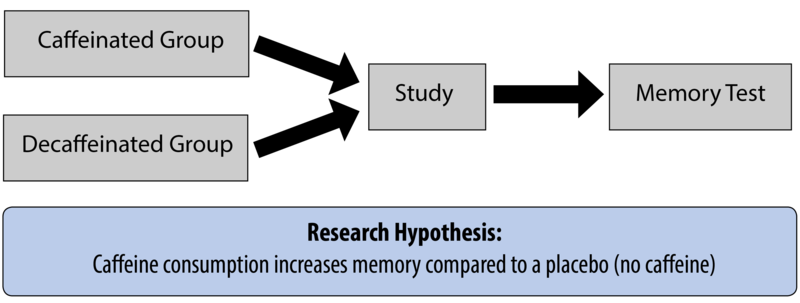
- The caffeine group performs better (support for the hypothesis).
咖啡因组表现更好(支持假设)。 - The no-caffeine group performs better (evidence against the hypothesis).
无咖啡因组表现更好(反证据假设)。 - There is no difference in the performance between the two groups (also evidence against the hypothesis).
两组之间的表现没有差异(也证明了该假设的反面)。
Let’s look, from a scientific point of view, at how the researcher should interpret each of these three possibilities.
让我们从科学的角度来看待研究人员应该如何解读这三种可能性。
First, if the results of the memory test reveal that the caffeine group performs better, this is a piece of evidence in favor of the hypothesis: It appears, at least in this case, that caffeine is associated with better memory. It does not, however, prove that caffeine is associated with better memory. There are still many questions left unanswered. How long does the memory boost last? Does caffeine work the same way with people of all ages? Is there a difference in memory performance between people who drink caffeine regularly and those who never drink it? Could the results be a freak occurrence? Because of these uncertainties, we do not say that a study—especially a single study—proves a hypothesis. Instead, we say the results of the study offer evidence in support of the hypothesis. Even if we tested this across 10 thousand or 100 thousand people we still could not use the word “proven” to describe this phenomenon. This is because inductive reasoning is based on probabilities. Probabilities are always a matter of degree; they may be extremely likely or unlikely. Science is better at shedding light on the likelihood—or probability—of something than at proving it. In this way, data is still highly useful even if it doesn’t fit Popper’s absolute standards.
首先,如果记忆测试的结果显示咖啡因组表现更好,这是支持假设的证据:至少在这种情况下,咖啡因与更好的记忆有关。然而,这并不证明咖啡因与更好的记忆有关。仍然有许多问题尚未解答。记忆增强效果会持续多长时间?咖啡因对所有年龄段的人是否起作用?经常喝咖啡因和从不喝的人的记忆表现是否有差异?结果可能是偶然事件吗?因为存在这些不确定性,我们不能说一项研究,尤其是一项单一研究,证明了一个假设。相反,我们说这项研究的结果提供了支持该假设的证据。即使我们在一万人或十万人中进行了测试,我们仍然不能用“被证实”来描述这一现象。这是因为归纳推理是基于概率的。概率始终是个程度问题;它们可能非常可能或不可能。科学更擅长揭示某事物的可能性或概率,而不是证明它。 以这种方式,即使数据不符合波普尔的绝对标准,仍然非常有用。
The science of meteorology helps illustrate this point. You might look at your local weather forecast and see a high likelihood of rain. This is because the meteorologist has used inductive reasoning to create her forecast. She has taken current observations—lots of dense clouds coming toward your city—and compared them to historical weather patterns associated with rain, making a reasonable prediction of a high probability of rain. The meteorologist has not proven it will rain, however, by pointing out the oncoming clouds.
气象学的科学有助于说明这一点。您可能会查看您当地的天气预报,并看到有很大可能下雨。这是因为气象学家使用归纳推理来创建她的预报。她将当前观测结果——许多密集的云朵正在向您的城市靠近——与与降雨相关的历史天气模式进行比较,从而合理预测有很大可能下雨。然而,通过指出正在靠近的云朵,气象学家并没有证明会下雨。
Proof is more associated with deductive reasoning. Deductive reasoning starts with general principles that are applied to specific instances (the reverse of inductive reasoning). When the general principles, or premises, are true, and the structure of the argument is valid, the conclusion is, by definition, *proven; *it must be so. A deductive truth *must *apply in all relevant circumstances. For example, all living cells contain DNA. From this, you can reason—deductively—that any specific living cell (of an elephant, or a person, or a snake) will therefore contain DNA. Given the complexity of psychological phenomena, which involve many contributing factors, it is nearly impossible to make these types of broad statements with certainty.
证明更多地与演绎推理相关联。演绎推理从应用于具体实例的一般原则开始(与归纳推理相反)。当一般原则或前提为真,而论证的结构是有效的时,结论则被定义为已证明;它必然如此。演绎真理必须适用于所有相关情况。例如,所有活细胞都含有 DNA。基于此,你可以演绎推断出,任何特定的活细胞(大象、人或蛇的活细胞)都会含有 DNA。鉴于心理现象的复杂性,涉及许多影响因素,要确定地提出这些广泛的陈述几乎是不可能的。
Test Yourself 2: Inductive or Deductive? 自我测试 2:归纳还是演绎?
A. The stove was on and the water in the pot was boiling over. The front door was standing open. These clues suggest the homeowner left unexpectedly and in a hurry.
A. 火炉开着,锅里的水正在滚沸。前门敞开着。这些线索表明房主出乎意料地匆忙离开了。
B. Gravity is associated with mass. Because the moon has a smaller mass than the Earth, it should have weaker gravity.
B.重力与质量有关联。由于月球的质量比地球小,所以它应该有较弱的重力。
C. Students don’t like to pay for high priced textbooks. It is likely that many students in the class will opt not to purchase a book.
C.学生不喜欢购买价格昂贵的教材。很可能有很多学生不打算购买一本书。
D. To earn a college degree, students need 100 credits. Janine has 85 credits, so she cannot graduate.
D. 要获得大学学位,学生需要 100 个学分。珍妮拥有 85 个学分,因此她无法毕业。
[See answer at end of this module]
[请参阅本模块结尾处的答案]
The second possible result from the caffeine-memory study is that the group who had *no *caffeine demonstrates better memory. This result is the opposite of what the researcher expects to find (her hypothesis). Here, the researcher must admit the evidence does not support her hypothesis. She must be careful, however, not to extend that interpretation to other claims. For example, finding increased memory in the no-caffeine group would not be evidence that caffeine harms memory. Again, there are too many unknowns. Is this finding a freak occurrence, perhaps based on an unusual sample? Is there a problem with the design of the study? The researcher doesn’t know. She simply knows that she was not able to observe support for her hypothesis.
咖啡因-记忆研究的第二种可能结果是没有摄入咖啡因的群体表现出更好的记忆力。这个结果与研究者所预期(她的假设)相反。在这里,研究者必须承认证据并不支持她的假设。然而,她必须小心,不要将这种解释推广到其他主张上。例如,发现不摄入咖啡因的群体记忆力增强并不意味着咖啡因会损害记忆力。同样,有太多未知因素。这个发现是不是偶然事件,也许基于一个不寻常的样本?研究的设计有问题吗?研究者不知道。她只知道她无法观察到对她的假设的支持。
There is at least one additional consideration: The researcher originally developed her caffeine-benefits-memory hypothesis based on conclusions drawn from previous research. That is, previous studies found results that suggested caffeine boosts memory. The researcher’s single study should not outweigh the conclusions of many studies. Perhaps the earlier research employed participants of different ages or who had different baseline levels of caffeine intake. This new study simply becomes a piece of fabric in the overall quilt of studies of the caffeine-memory relationship. It does not, on its own, definitively falsify the hypothesis.
至少还有一个额外的考虑因素:研究者最初根据之前研究的结论,提出了她的咖啡因对记忆的益处的假设。也就是说,之前的研究发现结果表明咖啡因可以增强记忆。研究者的单一研究不应该超过许多研究的结论。也许之前的研究使用了不同年龄或摄入咖啡因的基线水平不同的参与者。这项新研究仅仅成为所有关于咖啡因和记忆关系的研究中的一部分。它不能单独地明确证伪这个假设。
Finally, it’s possible that the results show no difference in memory between the two groups. How should the researcher interpret this? How would you? In this case, the researcher once again has to admit that she has not found support for her hypothesis.
最后,可能的结果显示两组之间没有记忆差异。研究员应该如何解释这一点?你会怎么解释?在这种情况下,研究员再次不得不承认她没有找到支持她假设的证据。
Interpreting the results of a study—regardless of outcome—rests on the quality of the observations from which those results are drawn. If you learn, say, that each group in a study included only four participants, or that they were all over 90 years old, you might have concerns. Specifically, you should be concerned that the observations, even if accurate, aren’t representative of the general population. This is one of the defining differences between conclusions drawn from personal anecdotes and those drawn from scientific observations. Anecdotal evidence—derived from personal experience and unsystematic observations (e.g., “common sense,”)—is limited by the quality and representativeness of observations, and by memory shortcomings. Well-designed research, on the other hand, relies on observations that are systematically recorded, of high quality, and representative of the population it claims to describe.
无论研究的结果如何,对研究结果的解释取决于所得观察的质量。如果你得知一个研究中每个组只有四名参与者,或者他们都是 90 岁以上,你可能会有顾虑。具体来说,你应该担心这些观察即使准确,也并不代表总体人群。这是从个人经历中得出的结论与从科学观察中得出的结论之间的明显区别之一。个人经历的证据——来自个人经验和非系统性观察(例如“常识”)——受到观察质量和代表性的限制,以及记忆缺陷。另一方面,良好设计的研究依赖于系统记录的观察,有高质量的观察结果,并且代表它所描述的人群。
Why Should I Trust Science If It Can’t Prove Anything? 为什么我要相信科学,如果它无法证明任何事情?
It’s worth delving a bit deeper into why we ought to trust the scientific inductive process, even when it relies on limited samples that don’t offer absolute “proof.” To do this, let’s examine a widespread practice in psychological science: null-hypothesis significance testing.
值得更深入地探究为何我们应该相信科学归纳过程,即使它依赖于不提供绝对“证明”的有限样本。为了做到这一点,让我们来研究心理科学中的一种广泛实践:零假设显著性检验。
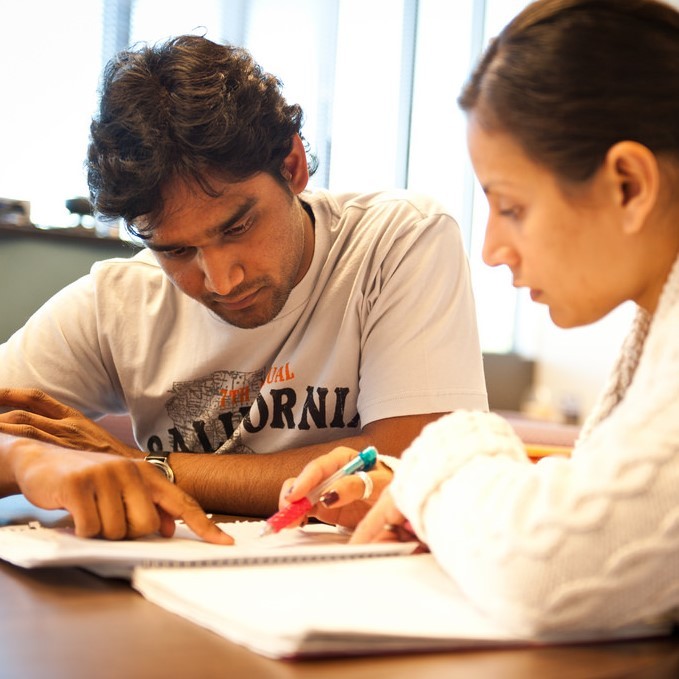
Is there a relationship between student age and academic performance? How could we research this question? How confident can we be that our observations reflect reality? [Image: Jeremy Wilburn, https://goo.gl/i9MoJb, CC BY-NC-ND 2.0, https://goo.gl/SjTsDg[]](https://goo.gl/SjTsDg%5D)
学生年龄和学业表现之间是否存在关联?我们如何研究这个问题?我们能多大程度上确定我们的观察反映了现实情况?[图片:Jeremy Wilburn,https://goo.gl/i9MoJb,CC BY-NC-ND 2.0,https://goo.gl/SjTsDg]
To understand this concept, let’s begin with another research example. Imagine, for instance, a researcher is curious about the ways maturity affects academic performance. She might have a hypothesis that mature students are more likely to be responsible about studying and completing homework and, therefore, will do better in their courses. To test this hypothesis, the researcher needs a measure of maturity and a measure of course performance. She might calculate the correlation—or relationship—between student age (her measure of maturity) and points earned in a course (her measure of academic performance). Ultimately, the researcher is interested in the likelihood—or probability—that these two variables closely relate to one another. Null-hypothesis significance testing (NHST) assesses the probability that the collected data (the observations) would be the same if there were no relationship between the variables in the study. Using our example, the NHST would test the probability that the researcher would find a link between age and class performance if there were, in reality, no such link.
为了理解这个概念,让我们从另一个研究例子开始。想象一下,一个研究人员对成熟度如何影响学业表现感到好奇。她可能有一个假设,即成熟的学生更有可能对学习和完成作业负责,因此在课程中表现更好。为了测试这一假设,研究人员需要一个成熟度的衡量指标和一个课程表现的衡量指标。她可能计算学生年龄(作为成熟度的衡量指标)和课程中获得的分数(作为学业表现的衡量指标)之间的相关性。最终,研究人员对这两个变量之间的密切关系的可能性或概率感兴趣。零假设显著性检验(NHST)评估了在研究中,如果变量之间没有关系,所收集到的数据(观察结果)将是相同的概率。以我们的例子为例,NHST 将检验如果实际上没有这样的关联,研究人员是否会发现年龄和课程表现之间的关联。
Now, here’s where it gets a little complicated. NHST involves a *null hypothesis, *a statement that two variables are not related (in this case, that student maturity and academic performance are not related in any meaningful way). NHST also involves an *alternative hypothesis, *a statement that two variables are related (in this case, that student maturity and academic performance go together). To evaluate these two hypotheses, the researcher collects data. The researcher then compares what she expects to find (probability) with what she actually finds (the collected data) to determine whether she can falsify, or reject, the null hypothesis in favor of the alternative hypothesis.
现在,这里就有点复杂了。NHST 涉及到一个零假设,即两个变量之间没有关系的陈述(在这种情况下,即学生的成熟度和学术表现之间没有任何有意义的关系)。NHST 还涉及到一个备择假设,即两个变量之间存在关系的陈述(在这种情况下,即学生的成熟度和学术表现是相关的)。为了评估这两个假设,研究者收集数据。然后,研究者将她预期的发现(概率)与她实际找到的东西(收集的数据)进行比较,以确定她是否可以证伪或者拒绝零假设,而支持备择假设。
How does she do this? By looking at the distribution of the data. The distribution is the spread of values—in our example, the numeric values of students’ scores in the course. The researcher will test her hypothesis by comparing the observed distribution of grades earned by older students to those earned by younger students, recognizing that some distributions are more or less likely. Your intuition tells you, for example, that the chances of every single person in the course getting a perfect score are lower than their scores being distributed across all levels of performance.
她是如何做到这一点的?通过观察数据的分布。分布是值的传播,例如,在我们的例子中,课程中学生得分的数值。研究人员将通过比较年长学生和年轻学生所获得的成绩的观察分布来验证她的假设,并意识到某些分布更或更少可能发生。例如,您的直觉告诉您,课程中每个人获得满分的机会要低于他们的分数分布在所有级别的表现中。
The researcher can use a probability table to assess the likelihood of any distribution she finds in her class. These tables reflect the work, over the past 200 years, of mathematicians and scientists from a variety of fields. You can see, in Table 2a, an example of an expected distribution if the grades were normally distributed (most are average, and relatively few are amazing or terrible). In Table 2b, you can see possible results of this imaginary study, and can clearly see how they differ from the expected distribution.
研究人员可以使用概率表来评估她在班级中发现的任何分布的可能性。这些表反映了过去 200 年来来自各个领域的数学家和科学家的工作。在 2a 表中,您可以看到如果成绩服从正态分布的话,预期分布的一个例子(大部分平均,相对较少的是优秀或糟糕的)。在 2b 表中,您可以看到这个假想研究的可能结果,并且可以清楚地看到它们与预期分布的不同之处。
In the process of testing these hypotheses, there are four possible outcomes. These are determined by two factors: 1) reality, and 2) what the researcher finds (see Table 3). The best possible outcome is accurate detection. This means that the researcher’s conclusion mirrors reality. In our example, let’s pretend the more mature students do perform slightly better. If this is what the researcher finds in her data, her analysis qualifies as an accurate detection of reality. Another form of accurate detection is when a researcher finds no evidence for a phenomenon, but that phenomenon doesn’t actually exist anyway! Using this same example, let’s now pretend that maturity has nothing to do with academic performance. Perhaps academic performance is instead related to intelligence or study habits. If the researcher finds no evidence for a link between maturity and grades and none actually exists, she will have also achieved accurate detection.
在测试这些假设的过程中,有四种可能的结果。这些结果取决于两个因素:1)现实,和 2)研究者所发现的情况(参见表 3)。最佳的可能结果是准确的检测。这意味着研究者的结论与现实相符。在我们的例子中,假设更成熟的学生确实表现稍好。如果这是研究者在数据中找到的结果,她的分析就符合对现实的准确检测。另一种准确检测的形式是,研究者没有发现某种现象的证据,但实际上该现象根本不存在!使用同样的例子,让我们假设成熟与学术成绩无关。也许学术表现实际上与智力或学习习惯有关。如果研究者没有找到成熟与成绩之间的联系,而实际上也不存在这种联系,她也将实现准确的检测。
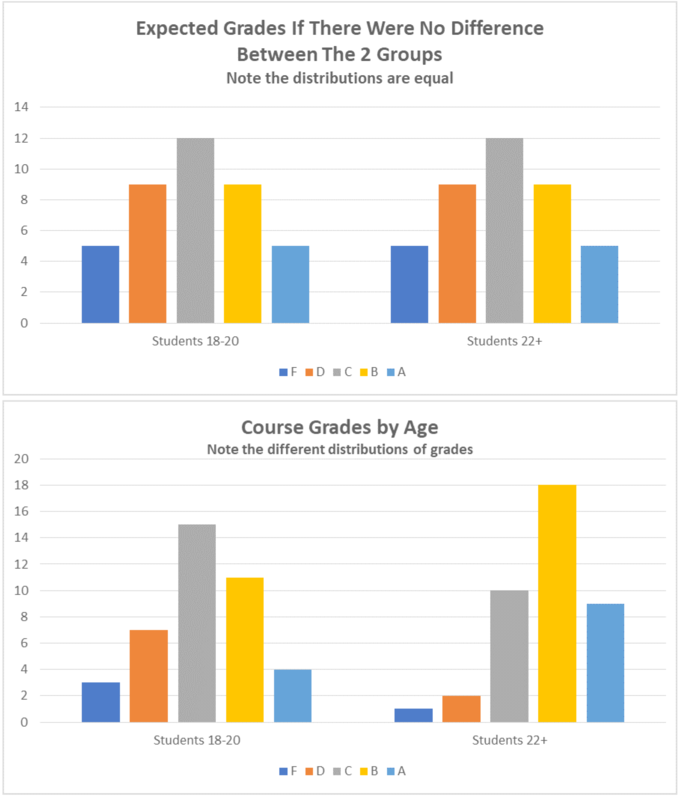
Table 2a (Above): Expected grades if there were no difference between the two groups. Table 2b (Below): Course grades by age
表 2a(上方):如果两组之间没有差异,预期成绩。表 2b(下方):按年龄分的课程成绩。
There are a couple of ways that research conclusions might be wrong. One is referred to as a type I error—when the researcher concludes there is a relationship between two variables but, in reality, there is not. Back to our example: Let’s now pretend there’s no relationship between maturity and grades, but the researcher still finds one. Why does this happen? It may be that her sample, by chance, includes older students who also have better study habits and perform better: The researcher has “found” a relationship (the data appearing to show age as significantly correlated with academic performance), but the truth is that the apparent relationship is purely coincidental—the result of these specific older students in this particular sample having better-than-average study habits (the real cause of the relationship). They may have always had superior study habits, even when they were young.
有几种可能导致研究结论错误的方式。其中之一被称为一类错误,即当研究人员得出两个变量之间存在关系的结论,但实际上并不存在。回到我们的例子:现在假设成熟度和成绩之间没有关系,但研究人员仍然发现了一个关系。为什么会这样呢?可能是她的样本中偶然包括了年纪较大的学生,他们也有更好的学习习惯和更好的表现:研究人员 “发现” 了一个关系(数据显示年龄与学术成绩显著相关),但事实上这种关系纯粹是巧合——这个特定样本中这些年纪较大学生拥有优秀的学习习惯(关系的真正原因)。他们可能从小就一直有出色的学习习惯。
Another possible outcome of NHST is a type II error, when the data fail to show a relationship between variables that actually exists. In our example, this time pretend that maturity is —in reality—associated with academic performance, but the researcher *doesn’t *find it in her sample. Perhaps it was just her bad luck that her older students are just having an off day, suffering from test anxiety, or were uncharacteristically careless with their homework: The peculiarities of her particular sample, by chance, prevent the researcher from identifying the real relationship between maturity and academic performance.
NHST 的另一个可能结果是第二类错误,即数据未能显示实际存在的变量之间的关系。在我们的例子中,假设成熟度实际上与学业表现有关,但研究人员在样本中未发现这一点。也许只是她的运气不好,导致她的年长学生在某一天状态不佳,遭受考试焦虑或者作业上的不小心。也许是她特定样本的特殊性质,仅仅巧合地阻止了研究人员找到成熟度和学业表现之间的真正关系。
These types of errors might worry you, that there is just no way to tell if data are any good or not. Researchers share your concerns, and address them by using probability values (p-values) to set a threshold for type I or type II errors. When researchers write that a particular finding is “significant at a p < .05 level,” they’re saying that if the same study were repeated 100 times, we should expect this result to occur—by chance—fewer than five times. That is, in this case, a Type I error is unlikely. Scholars sometimes argue over the exact threshold that should be used for probability. The most common in psychological science are .05 (5% chance), .01 (1% chance), and .001 (1/10th of 1% chance). Remember, psychological science doesn’t rely on definitive proof; it’s about the probability of seeing a specific result. This is also why it’s so important that scientific findings be replicated in additional studies.
这些类型的错误可能会让你担心,因为没有办法判断数据的好坏。研究人员分享你们的担忧,并通过使用概率值(p 值)来设置 I 型或 II 型错误的阈值来解决这些问题。当研究人员写道某个发现“在 p < .05 水平上显著”时,他们是在说,如果同样的研究重复 100 次,我们应该预期这个结果发生的次数少于五次—仅仅是偶然发生。也就是说,在这种情况下,I 型错误不太可能发生。学者们有时会就应该使用哪个概率阈值进行争论。在心理科学中最常见的是.05(5%的几率),.01(1%的几率),和.001(1/1000 的几率)。记住,心理科学并不依赖确定性的证据;它关注的是看到特定结果的概率。这也是为什么科学发现需要在其他研究中进行复制的原因之一。
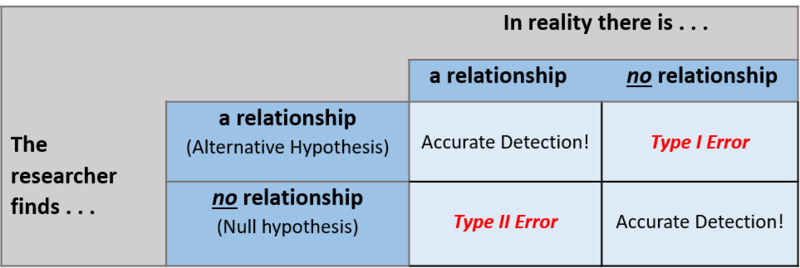
Table 3: Accurate detection and errors in research
表 3:研究中的准确检测和错误
It’s because of such methodologies that science is generally trustworthy. Not all claims and explanations are equal; some conclusions are better bets, so to speak. Scientific claims are more likely to be correct and predict real outcomes than “common sense” opinions and personal anecdotes. This is because researchers consider how to best prepare and measure their subjects, systematically collect data from large and—ideally—representative samples, and test their findings against probability.
这是因为这些方法论让科学通常值得信赖。并不是所有的主张和解释都是平等的;有些结论更可靠,可以说是更好的选择。科学主张更有可能是正确的并能预测真实的结果,而不是“常识”观点和个人轶事。这是因为研究人员考虑如何最好地准备和评估研究对象,从大型和理想情况下的代表性样本中系统地收集数据,并根据概率测试他们的发现。
Scientific Theories 科学理论
The knowledge generated from research is organized according to scientific theories. A scientific theory is a comprehensive framework for making sense of evidence regarding a particular phenomenon. When scientists talk about a theory, they mean something different from how the term is used in everyday conversation. In common usage, a theory is an educated guess—as in, “I have a theory about which team will make the playoffs,” or, “I have a theory about why my sister is always running late for appointments.” Both of these beliefs are liable to be heavily influenced by many untrustworthy factors, such as personal opinions and memory biases. A scientific theory, however, enjoys support from many research studies, collectively providing evidence, including, but not limited to, that which has falsified competing explanations. A key component of good theories is that they describe, explain, and predict in a way that can be empirically tested and potentially falsified.
从研究中生成的知识按照科学理论进行组织。科学理论是一个综合性框架,用于理解关于特定现象的证据。当科学家谈论理论时,他们的意思与日常对话中使用的术语有所不同。在常见的用法中,理论是一个有根据的猜测,比如“我对哪个团队能进入季后赛有一个理论”或者“我对我妹妹为什么总是迟到有一个理论”。这些信仰很可能受到许多不可靠因素的影响,比如个人意见和记忆偏差。然而,科学理论得到了许多研究的支持,这些研究集体提供了证据,包括但不限于已经推翻了竞争性解释的证据。好的理论的一个关键组成部分是它们通过经验测试和潜在的推翻来描述、解释和预测。
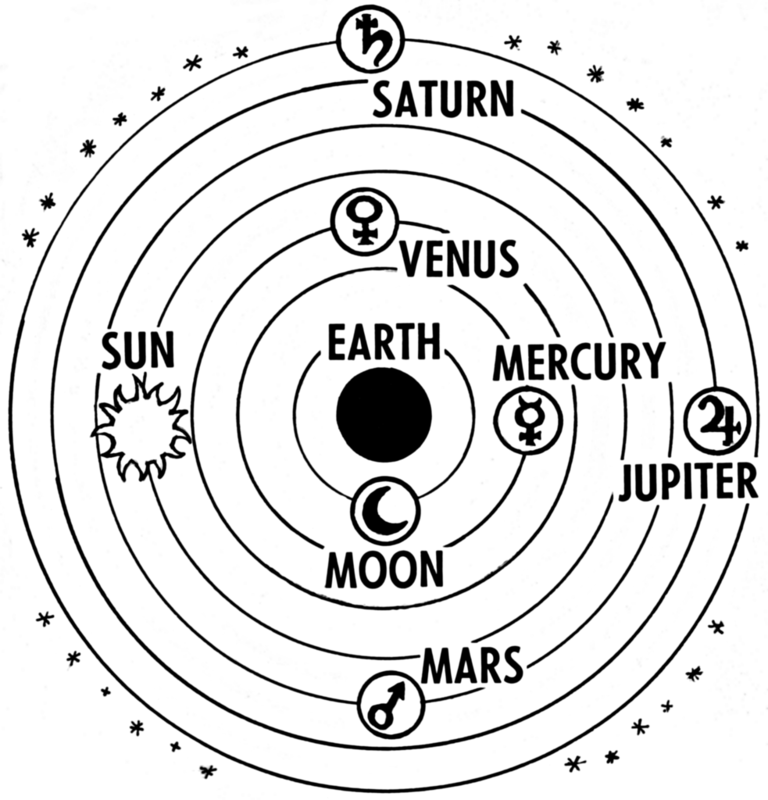
Early theories placed the Earth at the center of the solar system. We now know that the Earth revolves around the sun. [Image: Pearson Scott Foresman, https://goo.gl/W3izMR, Public Domain]
早期理论认为地球是太阳系的中心。我们现在知道地球绕着太阳运转。
Theories are open to revision if new evidence comes to light that compels reexamination of the accumulated, relevant data. In ancient times, for instance, people thought the Sun traveled around the Earth. This seemed to make sense and fit with many observations. In the 16th century, however, astronomers began systematically charting visible objects in the sky, and, over a 50-year period, with repeated testing, critique, and refinement, they provided evidence for a revised theory: The Earth and other cosmic objects revolve around the Sun. In science, we believe what the best and most data tell us. If better data come along, we must be willing to change our views in accordance with the new evidence.
理论如果有新的证据出现,并迫使我们重新检视累积的相关数据,那么它们是可以被修订的。古代,例如,人们认为太阳绕地球运行。这似乎是合乎逻辑的,并与众多观察相符。然而,在 16 世纪,天文学家开始系统地绘制天空中可见的物体,并经过 50 年的重复测试、批判和改进,他们提供了修订理论的证据:地球和其他宇宙物体绕太阳运转。在科学中,我们相信最好和最多的数据告诉我们什么。如果有更好的数据出现,我们必须愿意根据新的证据改变我们的观点。
Is Science Objective? 科学客观吗?
Thomas Kuhn (2012), a historian of science, argued that science, as an activity conducted by humans, is a social activity. As such, it is—according to Kuhn—subject to the same psychological influences of all human activities. Specifically, Kuhn suggested that there is no such thing as objective theory or data; all of science is informed by values. Scientists cannot help but let personal/cultural values, experiences, and opinions influence the types of questions they ask and how they make sense of what they find in their research. Kuhn’s argument highlights a distinction between facts (information about the world), and values (beliefs about the way the world is or ought to be). This distinction is an important one, even if it is not always clear.
托马斯·库恩(2012 年),科学史学家,认为科学作为人类进行的活动,是一种社会活动。因此,根据库恩的观点,科学受到所有人类活动的心理影响。具体而言,库恩认为不存在客观的理论或数据;科学的所有内容都受到价值观的影响。科学家无法避免个人/文化的价值观、经验和观点影响他们提出的问题类型以及他们如何理解他们在研究中发现的内容。库恩的论点强调了事实(关于世界的信息)与价值观(关于世界应该如何的信念)之间的区别。即使这一区别并不总是清晰明确,但它非常重要。
To illustrate the relationship between facts and values, consider the problem of global warming. A vast accumulation of evidence (facts) substantiates the adverse impact that human activity has on the levels of greenhouse gases in Earth’s atmosphere leading to changing weather patterns. There is also a set of beliefs (values), shared by many people, that influences their choices and behaviors in an attempt to address that impact (e.g., purchasing electric vehicles, recycling, bicycle commuting). Our values—in this case, that Earth as we know it is in danger and should be protected—influence how we engage with facts. People (including scientists) who strongly endorse this value, for example, might be more attentive to research on renewable energy.
为了说明事实和价值之间的关系,请考虑全球变暖问题。大量证据(事实)证实人类活动对地球大气层中温室气体水平的不良影响,从而导致天气模式的变化。还有一组信念(价值观),被许多人共享,影响他们在应对这种影响时所做的选择和行为(例如购买电动车、回收、骑自行车上下班)。我们的价值观(在这种情况下,即我们所知道的地球处于危险之中并且应该得到保护)影响我们如何与事实互动。例如,强烈支持这一价值观的人(包括科学家)可能会更加关注可再生能源的研究。
The primary point of this illustration is that (contrary to the image of scientists as outside observers to the facts, gathering them neutrally and without bias from the natural world) all science—especially social sciences like psychology—involves values and interpretation. As a result, science functions best when people with diverse values and backgrounds work collectively to understand complex natural phenomena.
这个插图的主要观点是,与科学家被认为是客观的事实的外部观察者,中立地从自然世界中收集事实并且没有偏见相反,所有科学(尤其是心理学等社会科学)都涉及价值观和解释。因此,当具有不同价值观和背景的人们共同努力理解复杂的自然现象时,科学的功能最佳。
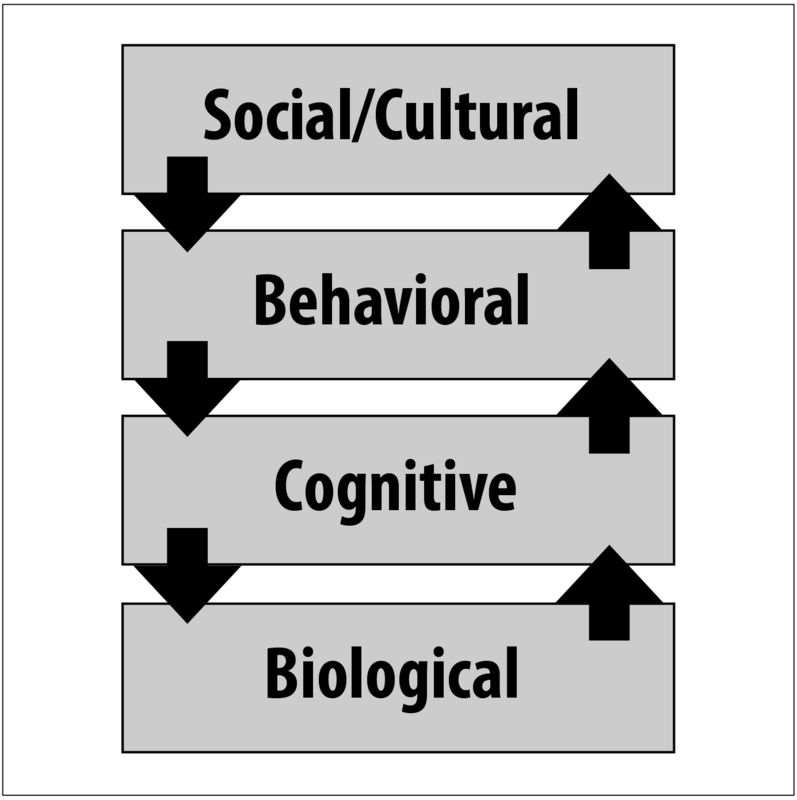
Indeed, science can benefit from multiple perspectives. One approach to achieving this is through levels of analysis. Levels of analysis is the idea that a single phenomenon may be explained at different levels simultaneously. Remember the question concerning cramming for a test versus studying over time? It can be answered at a number of different levels of analysis. At a low level, we might use brain scanning technologies to investigate whether biochemical processes differ between the two study strategies. At a higher level—the level of thinking—we might investigate processes of decision making (what to study) and ability to focus, as they relate to cramming versus spaced practice. At even higher levels, we might be interested in real world behaviors, such as how long people study using each of the strategies. Similarly, we might be interested in how the presence of others influences learning across these two strategies. Levels of analysis suggests that one level is not more correct—or truer—than another; their appropriateness depends on the specifics of the question asked. Ultimately, levels of analysis would suggest that we cannot understand the world around us, including human psychology, by reducing the phenomenon to only the biochemistry of genes and dynamics of neural networks. But, neither can we understand humanity without considering the functions of the human nervous system.
事实上,科学可以从多个角度受益。实现这一点的一种方法是通过分析层次。分析层次是指一个现象可以同时在不同层次上进行解释的观点。还记得针对考试复习与分散学习时间的问题吗?我们可以在不同的分析层次上回答它。在较低的层次上,我们可以使用脑部扫描技术来研究两种学习策略之间的生化过程是否不同。在较高的层次上,我们可以研究决策过程(如何学习)和注意力集中能力,以及它们与考试复习和分散练习的关系。在更高的层次上,我们可能对真实世界行为感兴趣,例如人们在使用这两种策略时学习的时间长度。同样地,我们可能对他人的存在如何影响这两种策略的学习也感兴趣。分析层次表明,一个层次并不比另一个层次更正确或更真实;其适用性取决于所提问问题的具体情况。 最终,分析层次追求暗示我们不能仅仅将现象简化为基因的生物化学和神经网络的动力学来理解我们周围的世界,包括人类心理学。但是,如果不考虑人类神经系统功能,我们也无法理解人类。
Science in Context 上下文中的科学
There are many ways to interpret the world around us. People rely on common sense, personal experience, and faith, in combination and to varying degrees. All of these offer legitimate benefits to navigating one’s culture, and each offers a unique perspective, with specific uses and limitations. Science provides another important way of understanding the world and, while it has many crucial advantages, as with all methods of interpretation, it also has limitations. Understanding the limits of science—including its subjectivity and uncertainty—does not render it useless. Because it is systematic, using testable, reliable data, it can allow us to determine causality and can help us generalize our conclusions. By understanding how scientific conclusions are reached, we are better equipped to use science as a tool of knowledge.
我们有很多方法来解释我们周围的世界。人们依赖常识、个人经验和信仰,以不同的方式和程度。所有这些方法都在帮助我们理解自己的文化方面有合法的益处,并且每种方法都提供了独特的视角,以及特定的用途和局限性。科学提供了另一种重要的理解世界的方法,虽然它有许多重要的优势,但像所有的解释方法一样,它也有局限性。了解科学的局限性,包括它的主观性和不确定性,不会使它变得无用。因为科学是系统性的,使用可测试的可靠数据,它能够让我们确定因果关系并且可以帮助我们推广我们的结论。通过了解科学结论的达成方式,我们更能够将科学用作一种知识工具。
Answer - Test Yourself 1: Can It Be Falsified? 答案 - 自测题 1:它能被证伪吗?
Answer explained: There are 4 hypotheses presented. Basically, the question asks “which of these could be tested and demonstrated to be false?". We can eliminate answers A, B and C. A is a matter of personal opinion. C is a concept for which there are currently no existing measures. B is a little trickier. A person could look at data on wars, assaults, and other forms of violence to draw a conclusion about which period is the most violent. The problem here is that we do not have data for all time periods, and there is no clear guide to which data should be used to address this hypothesis. The best answer is D, because we have the means to view other planets and to determine whether there is water on them (for example, Mars has ice).
答案解释:提出了四个假设。基本上,问题问“其中哪些能被证明是错误的?”。我们可以排除答案 A、B 和 C。A 是个人观点的问题。C 是一个目前没有现有措施的概念。B 则稍微棘手一些。一个人可以查看有关战争、攻击和其他形式的暴力的数据,来得出一个关于哪个时期最暴力的结论。问题在于我们没有所有时期的数据,并且没有明确的指导来确定应该用哪些数据来解决这个假设。最好的答案是 D,因为我们有办法观察其他行星,并确定它们上面是否有水(例如,火星有冰)。
Answer - Test Yourself 2: Inductive or Deductive 答案 - 自测 2:归纳还是演绎
Answer explained: This question asks you to consider whether each of 4 examples represents inductive or deductive reasoning. 1) Inductive—it is possible to draw the conclusion—the homeowner left in a hurry—from specific observations such as the stove being on and the door being open. 2) Deductive—starting with a general principle (gravity is associated with mass), we draw a conclusion about the moon having weaker gravity than does the Earth because it has smaller mass. 3) Deductive—starting with a general principle (students do not like to pay for textbooks) it is possible to make a prediction about likely student behavior (they will not purchase textbooks). Note that this is a case of prediction rather than using observations. 4) Deductive—starting with a general principle (students need 100 credits to graduate) it is possible to draw a conclusion about Janine (she cannot graduate because she has fewer than the 100 credits required).
解答解释:这个问题要求你考虑 4 个例子是否代表归纳推理还是演绎推理。1)归纳推理 —— 根据具体观察(炉子开着,门口敞开),我们可以得出结论:房主匆忙离开了。2)演绎推理 —— 从一个普遍原理出发(重力与物质有关),我们推断月球的重力比地球小,因为它的质量较小。3)演绎推理 —— 从一个普遍原理出发(学生不喜欢买教科书),我们可以对学生的行为进行预测(他们不会购买教科书)。注意,这是一种预测而不是根据观察得出的结论。4)演绎推理 —— 从一个普遍原理出发(学生需要 100 学分才能毕业),我们可以得出关于 Janine 的结论(她由于学分不足 100 而无法毕业)。
Outside Resources 外部资源
Article: A meta-analysis of research on combating mis-information
文章:关于对抗误信息的研究的元分析
http://journals.sagepub.com/doi/full/10.1177/0956797617714579
Article: Fixing the Problem of Liberal Bias in Social Psychology
修复社会心理学中的自由主义偏见问题
https://www.scientificamerican.com/article/fixing-the-problem-of-liberal-bias-in-social-psychology/
Article: Flat out science rejection is rare, but motivated rejection of key scientific claims is relatively common.
文章:彻底拒绝科学是罕见的,但对关键科学主张的有动机的拒绝相对普遍。
https://blogs.scientificamerican.com/guest-blog/who-are-you-calling-anti-science/
Article: How Anecdotal Evidence Can Undermine Scientific Results
文章:个别证据如何削弱科学结果
https://www.scientificamerican.com/article/how-anecdotal-evidence-can-undermine-scientific-results/
Article: How fake news is affecting your memory
文章:假新闻如何影响你的记忆
http://www.nature.com/news/how-facebook-fake-news-and-friends-are-warping-your-memory-1.21596
Article: New Study Indicates Existence of Eight Conservative Social Psychologists
文章: 新研究表明存在八位保守派社会心理学家
https://heterodoxacademy.org/2016/01/07/new-study-finds-conservative-social-psychologists/
Article: The Objectivity Thing (or, Why Science Is a Team Sport).
文章:客观实在的事物(或者说,为什么科学是一项团队运动)。
Article: Thomas Kuhn: the man who changed the way the world looked at science
文章:托马斯·库恩:改变世界对科学看法的人。
https://www.theguardian.com/science/2012/aug/19/thomas-kuhn-structure-scientific-revolutions
Video: Karl Popper's Falsification - Karl Popper believed that human knowledge progresses through 'falsification'. A theory or idea shouldn't be described as scientific unless it could, in principle, be proven false.
视频:卡尔·波普尔的证伪论 - 卡尔·波普尔认为人类的知识是通过“证伪”而不断进步的。一个理论或者观念除非在原则上能被证明为假,否则不能被称为科学。
Video: Karl Popper, Science, and Pseudoscience: Crash Course Philosophy #8
视频:卡尔·波普尔、科学与伪科学:Crash Course 哲学 #8
Video: Simple visualization of Type I and Type II errors
视频:Type I 和 Type II 错误的简单可视化
Web: An overview and history of the concept of fake news.
网络:虚假新闻的概述和历史。
https://en.wikipedia.org/wiki/Fake_news
Web: Heterodox Academy - an organization focused on improving "the quality of research and education in universities by increasing viewpoint diversity, mutual understanding, and constructive disagreement".
Web: Heterodox Academy - 一个专注于通过增加观点多样性、相互理解和建设性分歧来提高大学研究和教育质量的组织。
Web: The People's Science - An orgnization dedicated to removing barriers between scientists and society. See examples of how researchers, including psychologists, are sharing their research with students, colleagues and the general public.
Web: The People's Science - 一个致力于消除科学家与社会之间障碍的组织。看看研究人员(包括心理学家)如何与学生、同事和公众分享他们的研究。
http://thepeoplesscience.org/science-topic/human-sciences/
Discussion Questions 讨论问题
- When you think of a “scientist,” what image comes to mind? How is this similar to or different from the image of a scientist described in this module?
当你想到一个“科学家”,脑海中浮现的形象是什么?这与本模块中描述的科学家形象相似吗?或者有什么不同? - What makes the inductive reasoning used in the scientific process different than the inductive reasoning we employ in our daily lives? How do these differences influence our trust in the conclusions?
科学过程中使用的归纳推理与我们日常生活中使用的归纳推理有何不同?这些差异如何影响我们对结论的信任? - Why aren’t horoscopes considered scientific?
为什么占星术不被视为科学? - If science cannot “prove” something, why do you think so many media reports of scientific research use this word? As an educated consumer of research, what kinds of questions should you ask when reading these secondary reports?
如果科学不能“证明”某事,你认为为什么有这么多关于科学研究的媒体报道会使用这个词?作为一个受过教育的研究消费者,在阅读这些次级报道时应该提出什么样的问题? - In thinking about the application of research in our lives, which is more meaningful: individual research studies and their conclusions or scientific theories? Why?
在思考研究应用于我们生活时,哪一种更有意义:独立研究以及它们的结论还是科学理论?为什么? - Although many people believe the conclusions offered by science generally, there is often a resistance to specific scientific conclusions or findings. Why might this be?
尽管许多人普遍相信科学提供的结论,但对具体科学结论或发现通常存在抵制。这可能是由于什么原因?
Source: https://nobaproject.com/modules/thinking-like-a-psychological-scientist